This project area contains materials that provide an introduction to the Movement Ecology framework and explain its importance as a method for mapping and developing strategy within the world of social movements. Among other topics, we discuss different theories of change, how they can complement one another, and tensions that commonly emerge between them.
What Is Movement Ecology?
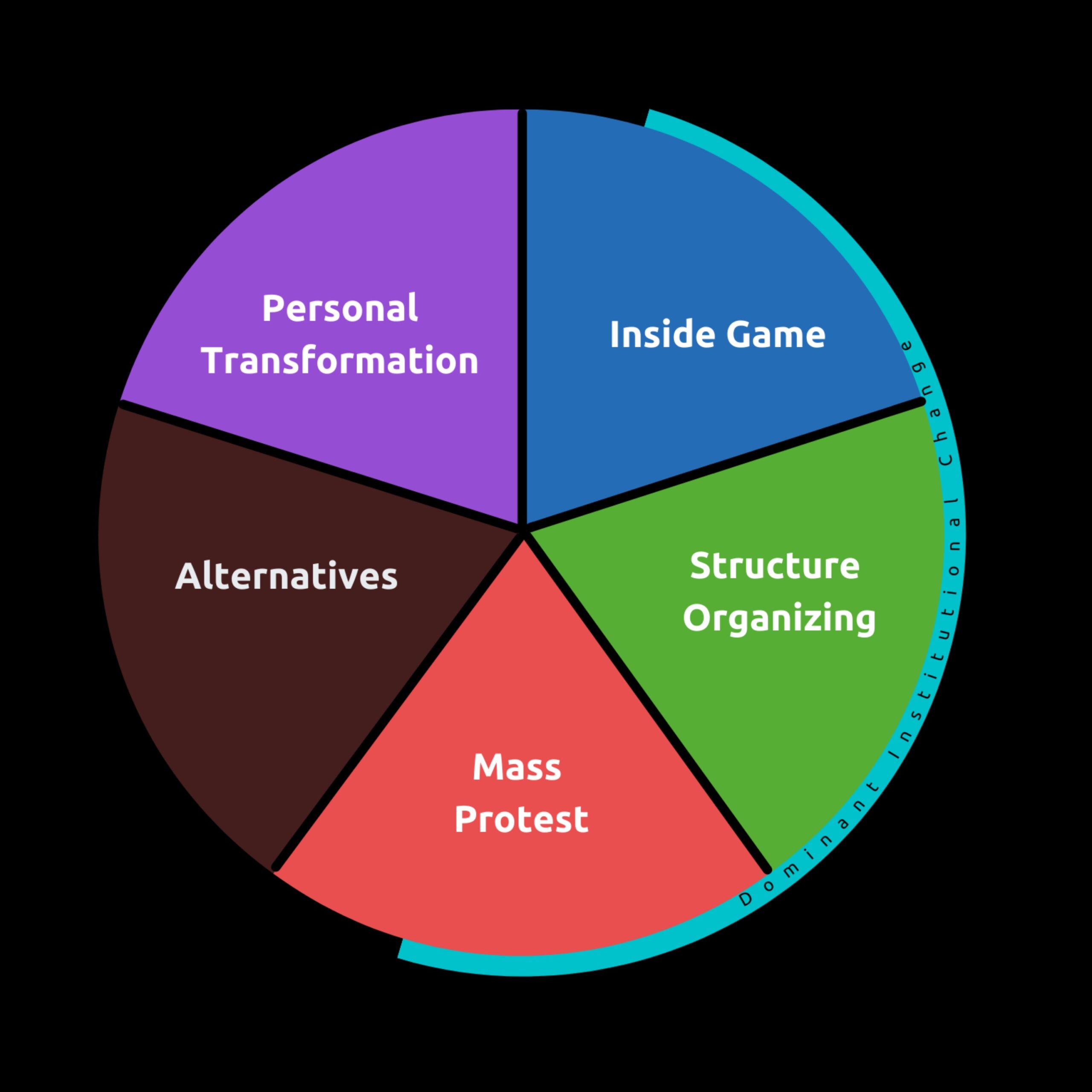
We have worked closely with Carlos Saavedra and the Ayni Institute to develop a framework of Movement Ecology that classifies social movement organizations based on their organizing lineages and primary theories of change.
We divide organizations into five categories. Three of the approaches (Inside Game, Structure-based Organizing, and Mass Protest) are focused on making demands of dominant institutions in society or winning power within these institutions. Two other approaches, Alternatives and Personal Transformation, are oriented toward creating change outside of currently dominant institutions, building spaces and relationships that model (or “prefigure”) a new society.
The following video, created by Ayni, provides an overview of the Movement Ecology framework:
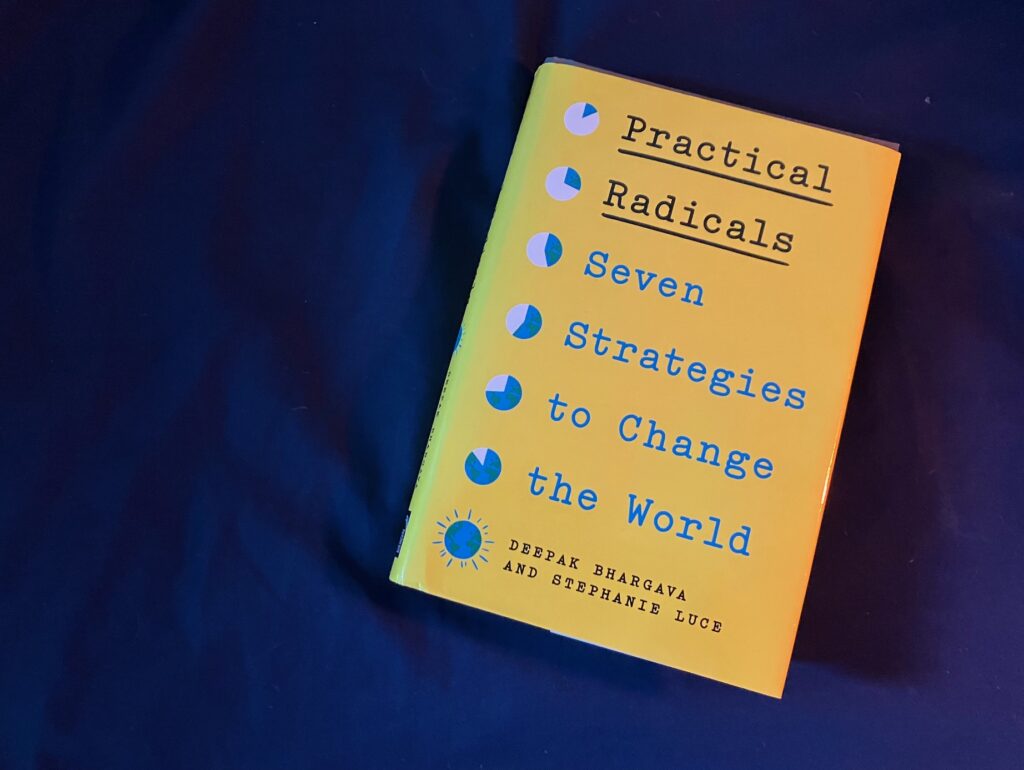
A conversation with Deepak Bhargava and Stephanie Luce about their new book, Practical Radicals, and the need for the left to embrace a rigorous, multi-pronged strategy for change.
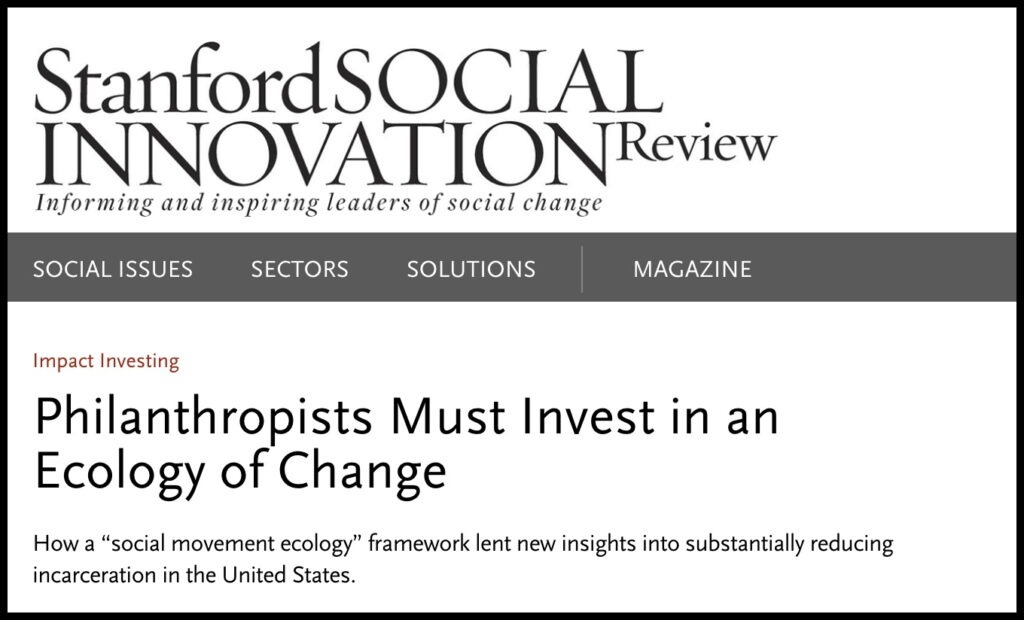
Drawing on the Movement Ecology framework, Chloe Cockburn of Open Philanthropy wrote an article for the Stanford Social Innovation Review about how this model can guide funders.
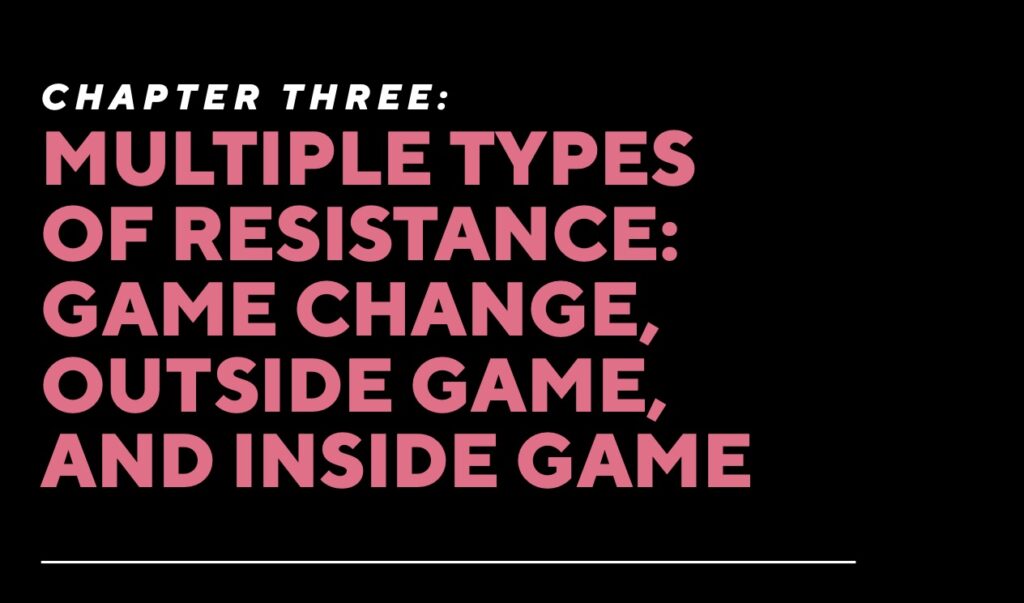
Chapter 3 of the Resistance Guide, an organizing manual written by Paul Engler and Sophie Lasoff, describes how strategies of “game change,” “outside game,” and “inside game” interact. Read an excerpt here.
In 2018, Whirlwind Institute co-director Paul Engler was one of the lead authors on the Ayni Institute’s “Funding Social Movements” report. Part One of the report discusses how the Movement Ecology framework helps users to identify under-supported segments of the movement ecosystem.