In This Is an Uprisingwe describe the interplay of mass protest, momentum, and structure-based organizing, and we make an argument about the importance of “moments of the whirlwind” in creating social change.
In this project area, we elaborate on the concepts found there and provide additional resources related to:
Beyond the materials we offer here, Whirlwind Institute co-director Paul Engler was one of the founders of the Momentum training, and he serves as an advisor and trainer for the Ayni Institute. We recommend that those seeking group training explore the offerings of these allied organizations.
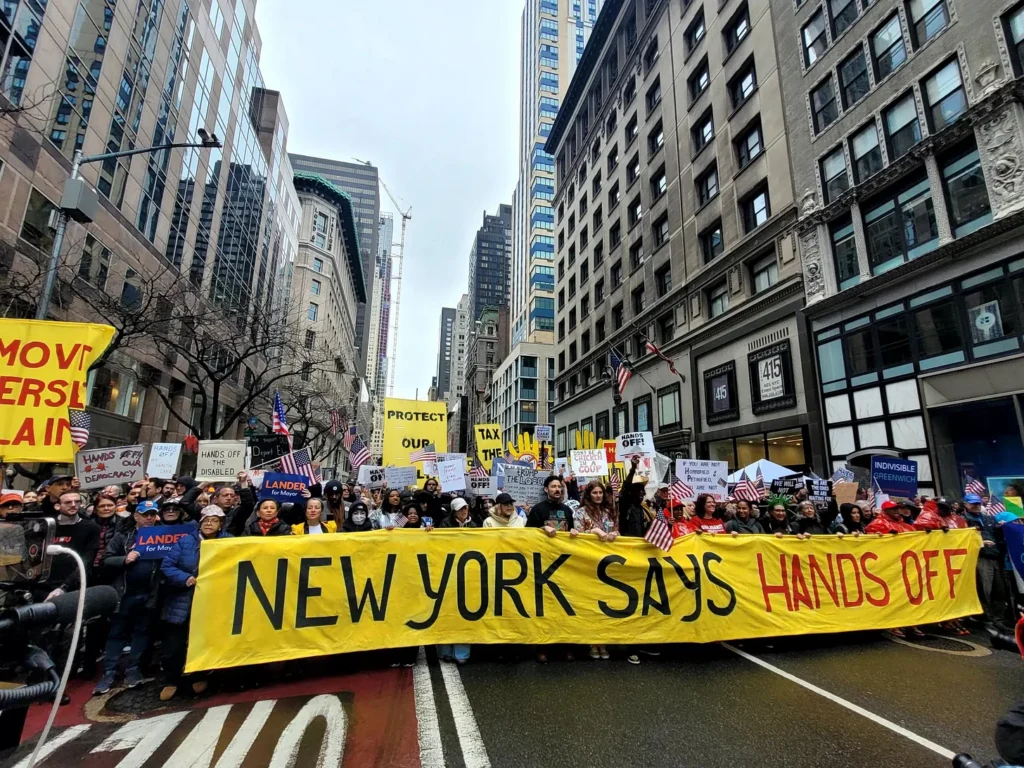
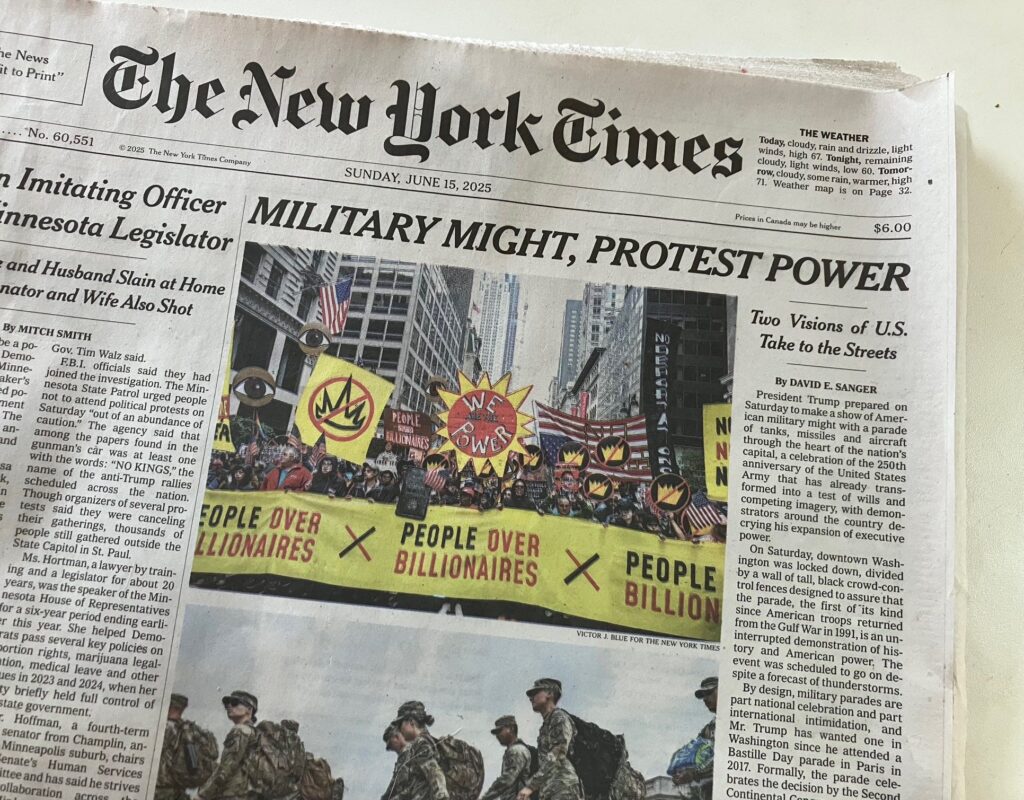
Protest and Polarization
Why is polarization around hot-button issues an inevitable part of social movement efforts? And how can activists know when they are using polarization effectively?
This two-part series aims to answer these questions, explaining about how movements can understand and harness the polarizing effects of protest.
It describes the importance of shifting the “spectrum of support” around an issue by dampening the enthusiasm of opponents, converting previously neutral observers into passive supporters, and turning passive sympathizers into active allies and movement participants.
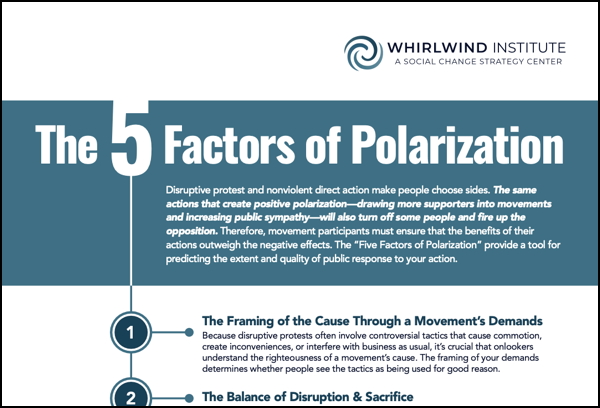
The second part, “How to Make Sure Your Disruptive Protest Helps Your Cause,” examines the “Five Factors of Polarization.” These are the key variables that shape whether or not the polarization created by protest actions will be helpful for a cause.
Although activists never have complete control in determining the extent and quality of the public response that an action is likely to generate, they can optimize their chances of success by thinking carefully about these factors.
As a supplement to these articles, we have created a one-page handout on the “Five Factors of Polarization” which provides a visual overview of this framework. The handout is designed for use in trainings and group discussions, and it is available for download here.
For movements trying to harness the energy that emerges during political upheavals, mass training provides a crucial means to develop leadership and bring in new participants.
An innovative Extinction Rebellion campaign to end to fossil fuel subsidies in the Netherlands offers key lessons for the next wave of the climate movement.
Jeremy Brecher, author of the labor-history classic Strike!, considers the recent wave of teacher walkouts, how we can overcome America's "strike drought," and the future role of mass disobedience in democratic politics.
This article explains the “pillars of support” framework, and it provides a case study of how movement impacts can be tracked through a variety of social institutions.