In this project area we offer guidance on how to measure the outcomes of mass mobilizations, examining key metrics for tracking social movement impacts. We also provide case studies that document gains won by past movements.
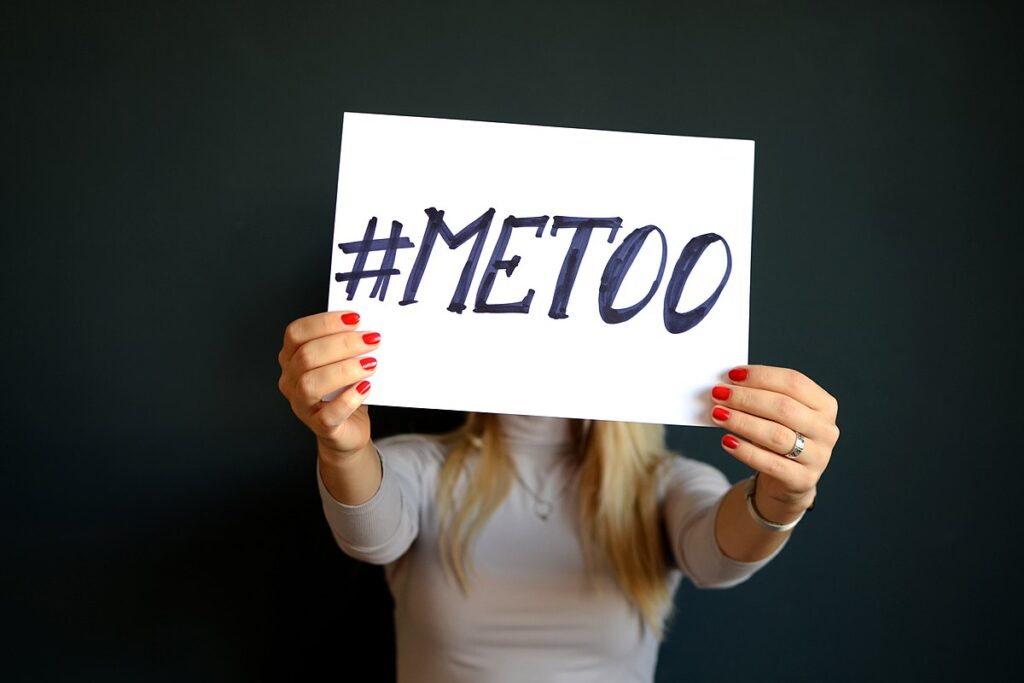
It takes effort to track the impacts of mass mobilizations like #MeToo, Occupy or Black Lives Matter, but understanding social change is impossible without such work.
This article explains the “pillars of support” framework, and it provides a case study of how movement impacts can be tracked through a variety of social institutions.
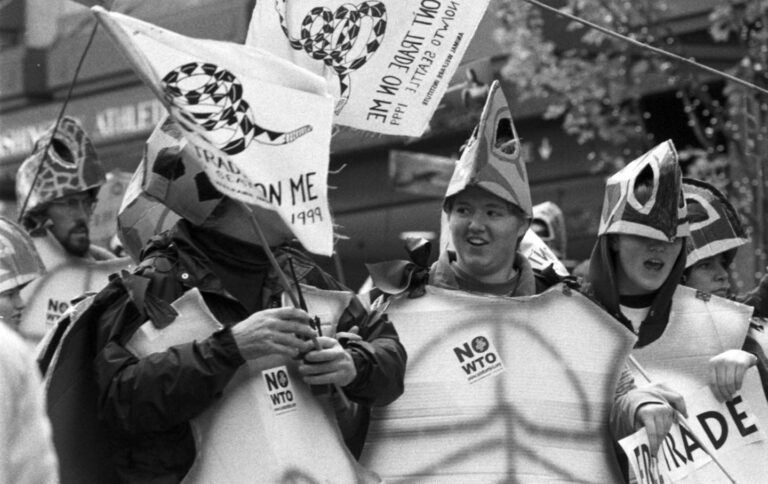
The following articles, written on anniversaries of the protests against the 1999 World Trade Organization meetings in Seattle, discuss the lasting relevance of those demonstrations, as well as the wider impact of the period’s global justice movement.
In 2018, Whirlwind Institute co-director Paul Engler was one of the lead authors on an Ayni Institute report entitled Funding Social Movements: How Mass Protest Makes an Impact.This guide was created as a resource for funders interested in understanding the impacts and dynamics of social movements, as well as in how to best support them.
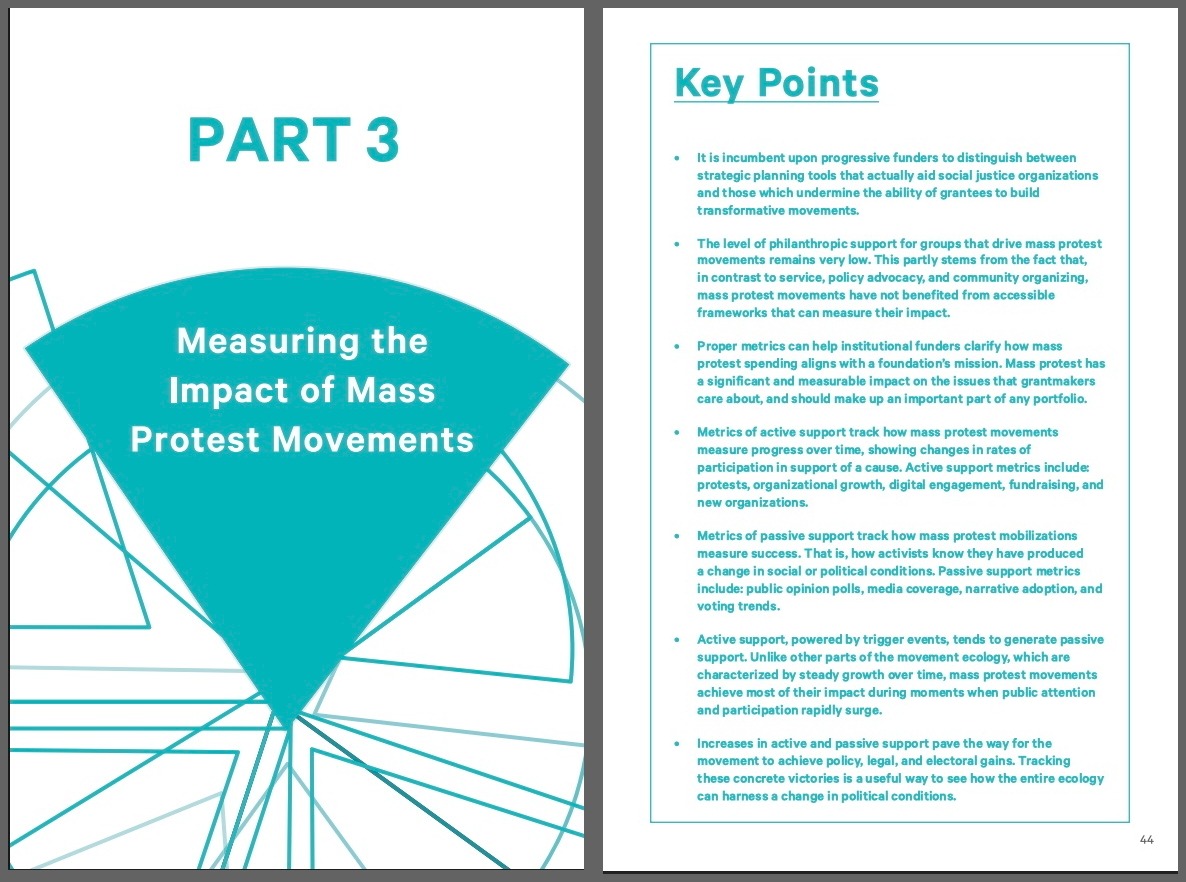
A main section of the document (Part III: Measuring the Impact of Mass Protests Movements) is dedicated to discussing how outside observers can quantify and document the effects that movements have. This includes discussion of metrics appropriate for tracking social movement impact on active and passive support around an issue.
Active support can be measured through monitoring of: 1) Protests, 2) Organizational growth, 3) Digital engagement, 4) Fundraising, and 5) New organizations.
Changes in passive support can be tracked through: 1) Public opinion polls, 2) Media coverage, 3) Narrative adoption, and 4) Voting trends.
The report explains how the growth of active and passive support relate to instrumental gains around social justice issues, and how movements make critical contributions to changing the political landscape in order to make concrete wins possible. The full report is available here.
As a supplement to this document, Ayni created the Movement Metrics Research site, which provides additional information about the data, concepts, and case studies used in the report.
We recommend the following for further reading on tracking the outcomes and effects of social movements:
Social Change Lab, based in the UK, has published a number of useful reports on movement impacts. In particular, their 2022 literature review provides a valuable summary of findings from a wide range of academic sources. See: “Protest Outcomes: Literature Review,” by Sam Glover and James Ozden, March 2022, Social Change Lab.
Climate Emergency Fund has also released a helpful literature review on the impacts and effectiveness of climate and environmental protests, examining how movements impact public opinion, voting, and public policy. See: “Protest Impact & Effectiveness Literature Review,” by Climate Emergency Fund, November 2024, available at this link.
University of Pennsylvania Political Scientist Daniel Gillion’s book, The Loud Minority: Why Protests Matter in American Democracy, investigates the impacts of activist mobilizations on voters, candidates, and electoral outcomes. “Drawing on historical evidence, statistical data, and detailed interviews about protest activity since the 1960s, [Gillion] shows that electoral districts with protest activity are more likely to see increased voter turnout at the polls,” among other effects. See: The Loud Minority: Why Protests Matter in American Democracy, by Daniel Q. Gillion, Princeton University Press, 2020.
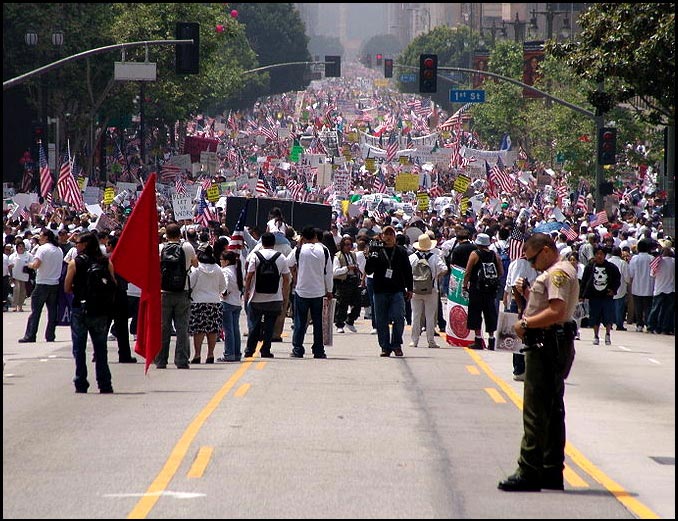
Harvard University’s Nonviolent Action Lab, led by Erica Chenoweth, regularly provides important data and analysis on social movement impacts. It also hosts the Crowd Counting Consortium, a “public interest and scholarly project to document protests and demonstrations in the United States.”